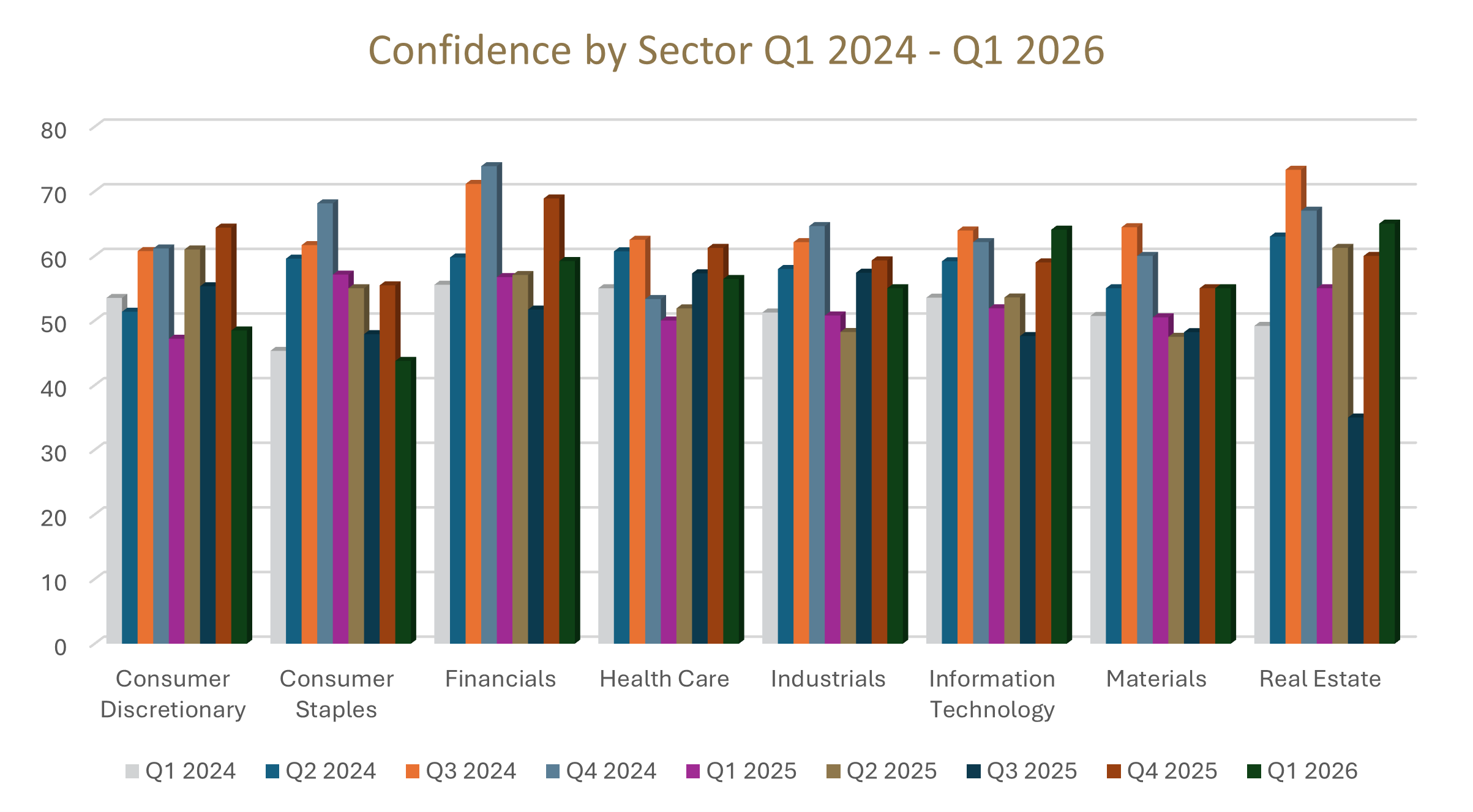
Information Technology (64.1, +5.1 points)
Confidence driver: AI adoption accelerating across productivity and operations
Investment stance: Strong appetite for digital transformation and automation
Cost pressure: Skills shortages persist; hardware/software costs stable
Policy exposure: Broadly positive on infrastructure investment commitments
Risk outlook: Middle East conflict impact on global tech supply chains monitored
Utilities (61.25, +0.25 points)
Confidence driver: Improved infrastructure investment and regulatory stability
Investment stance: Cautiously optimistic; long-term capex planned
Cost pressure: Fuel price volatility threatens operational margins
Policy exposure: High; depends on budget execution and SOE reform
Risk outlook: Municipal capacity constraints and geopolitical fuel shocks
Financials (59.2, −9.7 points)
Confidence driver: Fiscal discipline welcomed; credit conditions stable
Investment stance: Selective; watching political risk and policy certainty
Cost pressure: Rising compliance costs; BEE regulations a drag
Policy exposure: Highly sensitive to tax policy and economic growth trajectory
Risk outlook: Political fragmentation and fuel-driven inflation
Health Care (56.4, −4.9 points)
Confidence driver: GNU stability; demand for health services resilient
Investment stance: Moderate; innovation ongoing
Cost pressure: Input costs stabilising; margins under pressure
Policy exposure: Trump USAID funding cuts impacting NGO-linked sectors
Risk outlook: Oil price impact on pharmaceutical and logistics costs
Industrials (55.0, −4.3 points)
Confidence driver: Infrastructure budget allocations; Transnet and Eskom improvements
Investment stance: Selective expansion; waiting for policy clarity
Cost pressure: Fuel, transport, and logistics costs elevated
Policy exposure: High; red tape, BEE compliance, and municipal rates cited
Risk outlook: Geopolitical fuel shocks and US trade policy uncertainty
Materials (55.0, 0 points)
Confidence driver: Commodity price stabilisation; export opportunities
Investment stance: Hold; watching global demand signals
Cost pressure: Elevated on transport and energy
Policy exposure: Moderate; Transnet and Eskom reforms critical
Risk outlook: Global market volatility; Middle East tensions affecting demand
Consumer Discretionary (48.5, −15.9 points)
Confidence driver: Weak; disposable income under pressure from inflation and tax bracket creep
Investment stance: Cautious; demand outlook subdued
Cost pressure: High; fuel, input costs, and margin compression
Policy exposure: Budget measures on discretionary spend watched closely
Risk outlook: Trump trade policy and Middle East war impact on sentiment
Consumer Staples (43.75, −11.75 points)
Confidence driver: Weakest sector; demand muted, input costs elevated
Investment stance: Defensive; efficiency focus
Cost pressure: Severe; fuel, logistics, and commodity input pressures
Policy exposure: Limited confidence in policy materialisation
Risk outlook: Iran-driven fuel price hikes and geopolitical alliances damaging trade